Best Fabric Blends for No-Gi Grappling: The Ultimate Fabric Guide for BJJ Brands and Academies
Why Fabric Choice Makes or Breaks No-Gi Grappling Apparel
If you run a Brazilian Jiu-Jitsu academy, manage a competition team or operate a combat sports apparel brand, you’ve probably seen this problem many times.
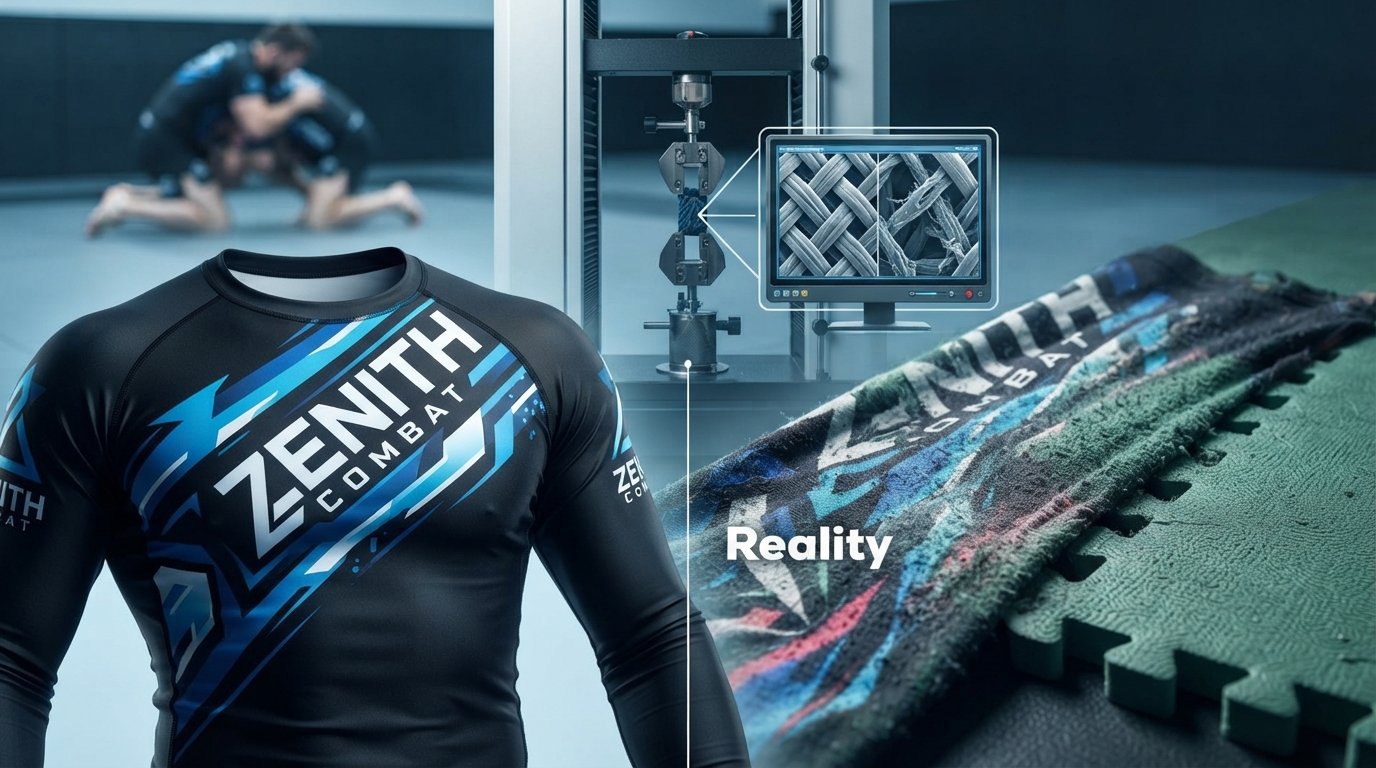
A brand launches a new No-Gi grappling gear. It looks incredible online. The design pops. The colors are sharp. The athletes love it for the first few weeks.
Then the reality of No-Gi Grappling begins.
The no-gi grappling uniform starts pilling after constant mat friction. The fabric loses compression. Colors fade after repeated washing. Within months, the gear that looked premium suddenly feels disposable.
This is exactly why understanding the best fabric blends for no-gi grappling matters far more than most buyers realize.
From a manufacturing perspective, fabric selection determines:
- how long uniforms survive daily academy training
- how well rash guards hold compression
- whether sublimation prints stay vibrant
- how comfortable athletes feel during long sessions
In other words, fabric science is the foundation of durable grappling gear.
Most athletes look at No-gi grappling uniform rom a style or comfort angle. But for BJJ brands, coaches and academy owners ordering in bulk, the conversation must go deeper.
You need to think about performance fabrics, stretch ratios, wash durability and long term uniform longevity.
And that is exactly what this guide explores.
We will break down the best fabric blends for no-gi grappling, the material science behind them, and the key decisions that BJJ apparel brands and academies should make before committing to production.

What No-Gi Grappling Really Demands from Performance Fabrics
Why the No- Gi fabrics Fail in Real Training Environments
Before discussing materials, we need to understand something crucial.
No-Gi training is one of the most fabric destroying environments in sportswear.
A typical No-gi grappling uniform used in submission grappling or MMA training goes through more stress in a month than many sports garments experience in a year.
Think about what happens during a typical training week inside a busy academy.
Athletes roll on abrasive mats. They pull on sleeves and collars. Sweat saturates the fabric. The gear then goes into washing machines again and again.
All of this creates four major stress factors.
Abrasion from Mats and Friction
Every time an athlete shoots a takedown or scrambles during Mixed Martial Arts (MMA) or Brazilian Jiu-Jitsu, their no-gi apparel rubs against textured mats.
Low quality fabrics start pilling quickly.
High performance fabrics use abrasion resistant knit structures designed specifically for grappling.
Constant Stretch and Compression Movement
Unlike casual sportswear, No-Gi grappling apparel rely on compression fabric technology.
Athletes twist, bridge and explode through positions.
This means the material must include elastane or spandex fibers that allow the garment to stretch in all directions without losing shape.
This is where four way stretch performance fabric becomes essential.
Sweat Saturation and Moisture Management
During intense grappling rounds, athletes can lose massive amounts of sweat.
Poor fabrics trap moisture and become heavy. Worse, they create odor buildup.
This is why the best moisture wicking fabric for no-gi training uses synthetic fibers engineered to move sweat away from the skin.
Heavy Washing Cycles
Academies wash No-Gi grappling gear constantly.
That means the fabric must maintain:
- elasticity
- color vibrancy
- compression support
after dozens or even hundreds of wash cycles.
When manufacturers test durable fabrics for no-gi uniforms, they simulate these repeated washing cycles to ensure long term performance.

The Core Fibers Behind Modern Grappling Apparel
The Three Fibers That Dominate No-Gi Fabric Engineering
When discussing the best fabric blends for no-gi grappling, most modern apparel revolves around three primary fibers.
Each one plays a specific role in performance.
Polyester: The Backbone of Modern No-Gi grappling apparel
Polyester has become the backbone of modern No-Gi grappling apparel.
From a manufacturing standpoint, polyester offers several advantages that make it ideal for BJJ No-Gi fabric manufacturing.
First, it provides excellent moisture management. Polyester fibers naturally resist water absorption, allowing sweat to evaporate quickly.
Second, polyester is extremely compatible with sublimation printing, which is the most common method used for custom academy No-gi grappling uniforms.
This allows brands to create fully printed designs that never crack or peel.
Third, polyester maintains color extremely well.
For bulk production of team uniforms, this color stability becomes critical.
Because of these advantages, polyester is widely used in fabric blends for no-gi grappling apparels.
Nylon: The Premium Performance Fiber
If polyester is the workhorse fiber, nylon is often considered the luxury option.
Nylon fabrics feel smoother and softer against the skin.
They also provide excellent elasticity and durability.
This is why many high end grappling apparel brands choose nylon blends for competition No-Gi apparel.
However, nylon fabrics are typically more expensive to manufacture.
For private label BJJ no-gi grappling uniform fabric options, this means nylon is often reserved for premium product lines.
Spandex / Elastane: The Engine of Compression
The final key fiber is spandex, also known as elastane or Lycra.
Without elastane, No-gi grappling apparel would behave like normal athletic shirts.
Spandex provides the compression support and stretch recovery that allows the apparel to move with the body.
Most high performance grappling apparel contains 15% to 25% elastane.
This percentage determines how strong the compression feels.
For example:
80% polyester / 20% spandex
85% polyester / 15% elastane
75% nylon / 25% spandex
These ratios represent the most common fabric compositions used in No-gi grappling uniforms.
Curious how these fabrics feel on the mat? Explore our performance tested Rokai no-gi fabric samples to see which blend fits your academy’s training style best.

The Most Trusted Fabric Blends Used in Professional No-Gi Apparel
What BJJ Brands Actually Use in Production
Once we understand the fibers, the next step is understanding how manufacturers combine them.
The best fabric blends for no-gi grappling are not random combinations.
They are engineered blends designed to balance durability, stretch and print compatibility.
Polyester Spandex Blend: The Industry Standard
The most common blend used in high performance fabric for BJJ no-gi uniforms is:
80% polyester / 20% spandex
This combination creates a strong balance between flexibility and durability.
Polyester provides the structural backbone of the fabric, while spandex delivers compression and stretch.
This blend also works perfectly with sublimation compatible fabrics, which is why many BJJ academies and apparel brands rely on it for team uniforms.
For bulk manufacturing, polyester spandex blends remain the safest and most cost effective option.
Nylon Spandex Blend: The Premium Option
The second major blend used in no-gi grappling gear is:
75% nylon / 25% spandex
This fabric is softer and more elastic than polyester blends.
Athletes often describe it as feeling more “second skin.”
Because of the higher elasticity, this blend is frequently used in premium no-gi grappling apparel and competition apparel.
However, nylon fabrics are usually more expensive, which means they are less common in large academy uniform orders.
Microfiber Polyester Blends: The Lightweight Specialist
Some manufacturers also use microfiber polyester blends.
These fabrics are ultra lightweight and extremely breathable.
They are particularly useful for hot climate academies where athletes train in high humidity environments.
Microfiber polyester also offers excellent quick dry grappling apparel fabric performance, which helps reduce odor buildup between sessions.
Want to streamline your team’s uniform durability? Check out our bulk tested polyester spandex and nylon-spandex blends built for academy life.”

Fabric Weight (GSM): The Hidden Detail Most BJJ Buyers Overlook
When academy owners or brand founders search for the best fabric blends for no-gi grappling, they usually focus on fiber composition first.
Polyester or nylon.
Spandex ratios.
Stretch performance.
But one detail quietly shapes the entire experience of a No-gi grappling gear which is the fabric GSM.
GSM stands for grams per square meter and it measures the density of a textile. In simple terms, it tells you how heavy or thick a fabric feels.
This single number directly affects durability, heat management and compression performance.
In the world of no-gi grappling apparel, most rash guard fabrics fall into three categories.
Lightweight Fabrics (180 to 220 GSM)
Lightweight fabrics prioritize breathability and mobility. Many athletes prefer them in hot climates or during long open mat sessions.
Because they are thinner, they dry faster and feel cooler against the skin.
However, lightweight fabrics can wear out faster when used in busy academies where uniforms are washed daily.
For BJJ brands targeting professional athletes or recreational practitioners, this weight range often works well.
For high volume BJJ academies, it may not always be the best choice.
Standard Performance Weight (220 to 260 GSM)
This range is often considered the sweet spot for grappling apparel.
It offers a strong balance between breathability and durability. The compression feels supportive without becoming restrictive.
Many of the most durable fabrics for no-gi uniforms fall in this category.
For BJJ academy uniforms and team no-gi apparel , manufacturers frequently recommend this weight range because it performs consistently across repeated washing cycles.
Heavy Duty Academy Fabrics (260 GSM and Above)
For academies running multiple classes per day, heavier fabrics can make a big difference.
Higher GSM fabrics resist abrasion better and hold their compression longer.
They also provide more structure, which many athletes prefer during intense training.
The trade off is slightly reduced breathability.
But for uniform longevity, these fabrics often deliver the best long term value.
Unsure which GSM is ideal for daily training versus competition? Our academy tested no-gi fabrics give the right balance of comfort and durability.

Fabric Technologies That Are Transforming Modern No-Gi BJJ Apparel
The world of No-Gi grappling apparel has changed dramatically in the last decade.
What used to be simple athletic shirts has evolved into engineered performance gear using advanced textile technologies.
These innovations help solve the real problems academies face every day: sweat, odor, friction and fabric fatigue.
Moisture Wicking Fabric Technology
During intense rounds of Brazilian Jiu-Jitsu or submission grappling, athletes generate enormous amounts of sweat.
Traditional cotton fabrics trap that moisture.
High performance fabrics use moisture wicking technology to pull sweat away from the skin and spread it across the surface of the fabric.
This allows the moisture to evaporate faster, keeping athletes cooler and reducing discomfort during long sessions.
Antimicrobial Fabric Treatments
Anyone who has trained in a busy BJJ academy knows the reality of grappling gear.
No-Gi grappling gear can start to smell quickly.
Modern antimicrobial sports fabrics use treatments that inhibit bacterial growth inside the fibers.
While these treatments do not replace proper washing, they significantly reduce odor buildup and extend the freshness of uniforms.
For BJJ academies managing large team orders, this technology can improve athlete experience dramatically.
Anti Abrasion Knit Structures
Friction from mats and constant gripping puts enormous stress on fabric surfaces.
Some manufacturers address this by using high density knit sports fabric structures.
These knit patterns increase the durability of the material while maintaining flexibility.
The result is abrasion resistant sports fabric that can survive thousands of training rounds without breaking down.
Sublimation Compatible Fabrics
Custom graphics have become central to modern BJJ apparel brands.
From academy logos to full art No-gi uniforms, sublimation printing allows designers to create bold visuals that become part of the fabric itself.
However, not all materials work well with sublimation.
High quality polyester blends ensure that designs stay sharp, vibrant and resistant to fading.
For private label sportswear manufacturing, this compatibility is essential.
Looking for anti-odor and moisture-wicking fabrics for your next line? Rokai’s advanced no-gi apparel fabrics combine performance and longevity to keep your athletes fresh.”
How Serious Manufacturers Test No-Gi Grappling Apparel Fabrics
If you ask experienced academy owners what separates great rash guards from disappointing ones, they often mention the same thing.
Durability.
Behind the scenes, professional manufacturers conduct several forms of testing to ensure fabrics perform under real world grappling conditions.
Stretch Recovery Testing
No-Gi grappling uniforms stretch constantly during training.
If the fabric cannot recover its shape, the garment becomes loose and uncomfortable.
Stretch recovery tests simulate repeated stretching cycles to ensure the compression fabric for No-gi grappling gear maintains elasticity.
Abrasion Resistance Testing
This test measures how well fabrics resist surface wear when rubbed against rough surfaces.
For No-gi grappling apparel, this simulates contact with mat textures and friction during scrambles.
Strong fabrics maintain their integrity after thousands of abrasion cycles.
Wash Durability Testing
Academies wash uniforms constantly.
Testing labs run fabrics through repeated wash cycles to evaluate:
- color retention
- elasticity stability
- seam integrity
This process ensures that the best fabric blends for no-gi grappling remain functional long after purchase.
Color Fastness Testing
For sublimated no-gi grappling apparel, color performance matters.
Testing evaluates how dyes respond to washing, sweat and UV exposure.
High quality no-gi grappling apparel fabrics preserve the visual identity of BJJ academy uniforms and apparel brands.

Choosing the Right Fabric No-Gi grappling Blend for Your Academy or BJJ Brand
The truth is that there is no single universal fabric blend that works for every situation.
Different buyers have different priorities.
A BJJ academy owner ordering uniforms for 200 students faces different needs than a boutique BJJ apparel brand launching a premium No-gi apparel line.
The table below summarizes the most practical options.
| Use Case | Recommended Fabric Blend | Key Advantage |
| Academy uniforms | Polyester / Spandex | Durable and cost efficient |
| Premium no-gi apparels | Nylon / Spandex | Soft feel and superior stretch |
| Hot climate academies | Microfiber polyester blends | Lightweight and breathable |
| Competition apparel | Nylon compression fabrics | High elasticity and comfort |
For bulk production and team uniforms, polyester spandex remains the most widely used solution.
For premium performance gear, nylon blends provide a more luxurious feel.
Understanding these differences helps brands make informed manufacturing decisions.
No-Gi apparel Fabric Mistakes Many BJJ Brands Make And How to Avoid Them
Even experienced BJJ apparel companies occasionally make costly mistakes when choosing materials.
Here are some of the most common ones.
Choosing Too Little Elastane
Some brands reduce spandex content to lower costs.
Unfortunately, this weakens the compression performance of no-gi uniforms.
The result is a garment that feels loose and loses shape quickly.
Ignoring Sublimation Compatibility
Design driven brands often overlook fabric compatibility with printing techniques.
Using the wrong material can result in dull or fading designs.
For custom BJJ academy no-gi apparel, this mistake can ruin an entire product run.
Selecting Fabric That Is Too Thin
Low GSM fabrics may feel comfortable initially, but they wear out faster.
For high volume training academies, durability should always be a priority.
Weak Seam Construction
Fabric quality matters but seam reinforcement matters just as much.
Flatlock stitching and reinforced seams significantly extend the lifespan of no-gi grappling apparel.

Where No-Gi Grappling Fabrics Are Heading Next
The world of sports textiles continues to evolve.
Several emerging technologies are already shaping the next generation of No-gi grappling apparel.
Sustainable Performance Fabrics
Many manufacturers are exploring recycled polyester fabrics made from plastic waste.
These materials reduce environmental impact while maintaining high performance.
Ultra Lightweight Compression Fabrics
New knitting techniques are producing fabrics that offer strong compression while remaining extremely lightweight.
These fabrics may redefine comfort for long training sessions.
Advanced Antibacterial Technologies
Researchers are developing nano-treated fabrics that actively prevent bacterial growth.
These technologies could dramatically improve hygiene in academy uniforms.
The Big Takeaway for BJJ Brands and Academy Owners
When people ask about the best fabric blends for no-gi grappling, they are really asking a deeper question.
“How do we build no-gi grappling gear that survives real training?”
The answer lies in understanding fabric science.
Polyester spandex blends remain the industry standard because they balance durability, stretch and printing compatibility.
Nylon blends offer premium performance and comfort.
Microfiber fabrics provide breathability for hot environments.
But the real secret to long lasting gear is thoughtful design and rigorous testing.
For BJJ academies, grappling clubs and apparel brands, choosing the right fabrics from the beginning can prevent expensive mistakes later.
Frequently Asked Questions
1. What fabric blend is best for BJJ rash guards?
The most widely used blend is 80% polyester and 20% spandex because it provides durability, stretch and excellent compatibility with sublimation printing.
2. What fabric do professional BJJ rash guards use?
Many professional rash guards use polyester spandex or nylon spandex blends designed for compression, sweat management and abrasion resistance.
3. Are nylon no-gi grappling apparel better than polyester?
Nylon blends typically feel softer and stretch more easily, but polyester blends often offer better durability and color retention.
4. What GSM is best for rash guards?
Most high performance rash guards fall between 220 and 260 GSM, providing a balance between comfort and durability.
Final Thoughts: Building No-Gi Grappling Gear That Actually Lasts
The difference between average grappling apparel and exceptional gear often comes down to fabric engineering.
When brands invest time in understanding the best fabric blends for no-gi grappling, they create uniforms that athletes trust and wear for years.
For academies, that means fewer replacements and better value.
For apparel brands, it means stronger reputation and customer loyalty.
And for athletes, it means gear that performs every time they step on the mat.
Ready to Develop High Performance Grappling Apparel?
If you are a BJJ academy, combat sports brand or distributor looking to develop durable no-gi grappling and grappling uniforms, working with experienced manufacturers makes all the difference.
At ROKAI, we specialize in performance driven combat sports apparel manufacturing, including custom rash guards, grappling shorts and academy uniforms.
Our team focuses on fabric engineering, durability testing and bulk production solutions designed specifically for the needs of modern grappling brands.
Explore more at
https://rokaicorp.com and discover how high performance fabric development can elevate your next apparel line.
Aur padhein
 BJJ Training Apparel
BJJ Apparel Care for BJJ Clubs, Academies and Brands: A Complete Bulk Washing & Fabric Longevity Guide
Maintaining BJJ apparel care for BJJ academies, clubs and Brazilian Jiu Jitsu brands is one of the...
 BJJ Training Apparel
How to Wash BJJ Gi the Right Way: A Survival Guide for BJJ Academies & Brands
Protect Your Team’s Reputation, Branding & Grappling Uniform InvestmentIf you manage a BJJ academy, run a compe...
 BJJ Training Apparel
What Is a Gi in Jiu Jitsu? Complete Beginner’s Guide for Athletes, Coaches & BJJ Brands
What Is a Gi in Jiu Jitsu? Complete Beginner’s Guide for Athletes, Coaches & BJJ BrandsThe grappling uniform that sh...