What Is a Gi in Jiu Jitsu? Complete Beginner’s Guide for Athletes, Coaches & BJJ Brands
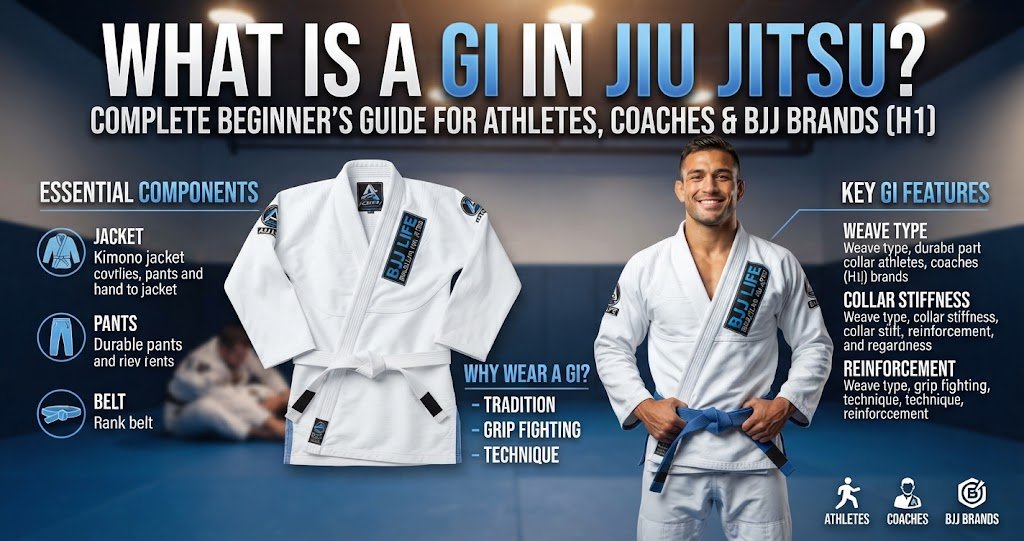
What Is a Gi in Jiu Jitsu? Complete Beginner’s Guide for Athletes, Coaches & BJJ Brands
The grappling uniform that shapes technique, culture, competition and the business of Brazilian Jiu-Jitsu
You walk into your first academy. The room smells faintly of disinfectant and effort. Everyone is dressed in thick cotton jackets tied with colored belts. You’re holding a borrowed uniform, wondering quietly, what is a gi in jiu jitsu and why does it matter so much?
That question is more important than it sounds.
If you’re an athlete, it feels like a BJJ uniform.
If you’re a coach, it’s a teaching tool.
If you’re a BJJ brand, distributor, or product developer, it’s a performance engineered revenue product with strict compliance standards.
Whether you’re a beginner stepping on the mat for the first time, a coach building a team culture or a BJJ brand developing performance apparel, understanding what is a gi in jiu jitsu changes how you see the sport entirely.
Let’s break it down properly not just definition level but real world, mat tested understanding.

What Is a Gi in Brazilian Jiu Jitsu?
At its core, what is a gi in jiu jitsu? A gi is the traditional uniform worn in Brazilian Jiu-Jitsu. It consists of a jacket, pants and a belt that reflects rank.
The word “gi” comes from Japanese. In martial arts, it simply means “uniform.” When people ask what is gi in jiu jitsu, they’re asking about the specific version used in Brazilian Jiu-Jitsu not karate, not judo but adapted for grappling.
So, what is a gi in BJJ specifically? It’s a reinforced grappling uniform designed to withstand pulling, gripping, twisting and pressure. The jiu jitsu uniform called gi isn’t just clothing. It becomes part of the technique.
Many beginners confuse the term and ask about the jiu jitsu gi meaning. In simple words, it’s the working uniform of BJJ. But in practice, it’s much deeper. It influences grips, strategy and even pacing.
If you’re asking what does gi mean in jiu jitsu, think of it as the tool that slows the game down and forces precision.
And when someone refers to a Brazilian jiu jitsu gi, they’re describing a grappling specific uniform with tighter sleeves and reinforced stitching compared to other martial arts.
In short, the BJJ gi explained properly is this: it’s both uniform and weapon.
What Is a BJJ Gi Made Of? Breaking Down the Uniform You’ll Sweat In
To understand what a gi is in Brazilian jiu jitsu, you need to understand its structure.
A standard Brazilian Jiu-Jitsu uniform includes three parts: jacket, pants and belt.
The jacket looks like a kimono technically called a kimono (martial arts gi) but in BJJ it has tighter cuffs and thicker collars. Those thick collars exist because opponents grab them constantly.
1. Jacket:
- Reinforced at shoulders and underarms
- Collar core thickness affects grip resistance
- Common weaves: pearl weave which is lightweight and durable, gold weave is heavier and competition ready
2. Pants:
- Reinforced drawstring waist
- Double stitched knees for grappling stress points
- Material: typically cotton or cotton blends for comfort and shrinkage control
3. Belt:
- Indicates jiu jitsu belt rank
- Holds jacket in place during lapel and sleeve grips
- Tightly woven to withstand repeated washes
- The belt reflects rank within the jiu jitsu belt hierarchy.
4. Performance Engineering:
- Stitch count and seam reinforcement prevent ripping
- GSM (grams per square meter) informs weight and durability
- IBJJF compliance ensures competitive legitimacy
Compared to a judo gi vs BJJ gi, the BJJ version has slimmer sleeves and a tighter cut. That small difference changes grip strategies significantly.
When brands design a grappling uniform, they focus on sleeve length, collar thickness and seam reinforcement. Coaches and product developers should pay attention to this construction quality defines durability.
For B2B buyers and BJJ brands, material choice impacts shrinkage, compliance and return rates. Understanding judo gi vs BJJ gi differences is critical. Judo cuts are looser. BJJ requires slimmer tailoring for grip control and IBJJF measurement standards.
A gi is not just martial arts clothing. It’s a performance engineered grappling uniform.

Gi vs No-Gi Jiu Jitsu: The Practical Difference Every Beginner Should Know
People constantly search for gi vs no gi jiu jitsu and the difference between gi and no gi. Let’s make it clear.
| Feature | Gi | No-Gi |
| Clothing | Gi + belt | Rash guard + shorts |
| Grips | Yes (lapels, sleeves) | No cloth grips |
| Speed | Slower, methodical | Faster, explosive |
| Submissions | Collar chokes, lapel traps | Leg locks, wrestling-based |
In gi, you manipulate fabric. In no-gi, you rely on underhooks and body control. Many athletes train both.
Understanding gi vs no gi jiu jitsu helps beginners choose what fits their goals. But long term, most practitioners benefit from learning both systems.
Is a Judo Gi the Same as a BJJ Gi?
No.
The judo gi vs BJJ gi comparison shows clear differences. Judo gis have wider sleeves and looser cuts. BJJ gis are slimmer for grip control and rule compliance.
Using the wrong uniform can limit movement or violate competition standards.
CTA:
Want a deeper technical breakdown of judo vs BJJ construction differences before you finalize production specs? Explore our full comparison guide to understand pattern cuts, fabric weight and compliance nuances before committing to bulk manufacturing.

Types of BJJ Gi: Not All Gis Feel the Same on the Mat, Product Segmentation Every BJJ Brand Should Understand
When someone asks what is a BJJ gi, they rarely realize there are multiple types.
A lightweight gi works best in hot climates and long training sessions. Many competitors prefer it to conserve energy.
A midweight gi balances durability and comfort.
A heavyweight gi feels thick and rigid. It makes it harder for opponents to grip deeply but can feel heavy during long rolls.
A competition gi must follow IBJJF gi rules. That includes color restrictions and sleeve measurements.
A training gi may prioritize comfort over strict competition standards.
Coaches and BJJ brands developing product lines must consider market segments: beginner friendly models, premium competition lines and durable academy uniforms.
CTA: Looking to structure a performance-based gi lineup? Work with a manufacturing partner that understands weave differentiation, fit grading and private label segmentation strategy.
How to Choose the Right Gi: A Practical Guide for Beginners & BJJ Brands
Choosing your first gi feels overwhelming. Beginners type searches like gi size chart and best gi for beginners because sizing mistakes are common.
Start with the gi size chart provided by the brand. Height and weight matter. But remember shrinkage. Most cotton gis shrink slightly after washing.
Choosing the wrong gi frustrates new students.
Sizing errors remain common. Always reference a detailed gi size chart. Fit should allow mobility without excessive looseness.
If you plan to compete, check BJJ gi rules and confirm IBJJF legality.
Budget matters too. Beginners don’t need premium embroidery heavy designs. Focus on durability and fit first.
For B2B buyers and BJJ brands, consistency in sizing across production batches builds trust. Product developers should test shrinkage rates before mass production.

Why Do Jiu Jitsu Fighters Wear a Gi? The Grip Game That Builds Real Skill
When beginners ask what is a gi in jiu jitsu, they often follow up with, “Why not just wear shorts?”
The answer is technical development.
The gi introduces grips. You grab sleeves, collars, lapels. You apply lapel grips, control sleeves and set up collar chokes. A tight sleeve grip can immobilize an opponent’s arm completely.
This is why gi training vs no-gi training feels different. The gi slows everything down. It forces you to think ahead. It rewards patience.
Some instructors argue that gi training simulates real life clothing scenarios. In many situations, people wear jackets or hoodies. The gi mimics that friction.
For beginners, the gi builds defensive awareness. It teaches posture, balance and grip fighting. It sharpens fundamentals before speed takes over.
For brands and coaches, offering structured gi classes reinforces traditional foundations. Many academies build culture around the uniform itself.
IBJJF Gi Rules Explained: What Brands, Coaches and Competitors Must Get Right
If you’re selling, sourcing, or training in a BJJ gi, compliance isn’t optional. The IBJJF gi rules directly impact product design, sizing accuracy, and even your return rates.
Here’s what matters most:
Sleeve Length Limits
Sleeves must reach the athlete’s wrist when arms are extended forward. They cannot be too short or excessively long. There must be enough space for the referee to insert four fingers inside the sleeve at the wrist. For brands, this means pattern grading must account for arm length across sizes, not just torso scaling.
Pant Length Limits
Pants must reach the ankle bone but not extend past the heel. Overly long pants can lead to disqualification. Consistent inseam grading across sizes is critical during production.
Collar Thickness
Collar thickness typically must not exceed approximately 1.3 cm and width is also regulated. An overly thick collar designed for durability can accidentally make the gi illegal for competition. Reinforcement must balance stiffness with compliance.
Allowed Colors
Under standard IBJJF competition guidelines, only white, blue and black gis are permitted. If you’re building academy branded colored gis, make sure you clarify whether they’re competition legal.
For brands and academies, labeling a product as “competition legal” means it should be:
- Designed using IBJJF measurements
- Shrinkage tested after washing
- Measured post production, not pre-wash
Failure to meet these standards affects athlete trust and brand credibility.

How Much Does a Jiu Jitsu Gi Cost for Beginners, clubs and BJJ brands?
| Category | Retail Price (Single Unit) | Bulk Cost (50 to 300+ Units) | Best For | Key Price Drivers | Customization Add-On Cost |
| Budget Gi | $60 to $90 | $40 to $65 | Beginners, trial students | Basic cotton weave, standard stitching | +$8 to $15 (basic logo embroidery) |
| Mid-Range Gi | $100 to $150 | $45 to $75 | Regular training, academies | Pearl weave, reinforced seams, stronger collar | +$10 to $20 (patches, custom labels) |
| Premium BJJ Gi | $180 to $250+ | $55 to $90 | Competitors, private label brands | Advanced weave, higher GSM, reinforced panels, IBJJF compliance | +$15 to $40 (multi-zone embroidery, custom collar, limited edition designs) |
What affects price? Fabric quality, stitching reinforcement, branding, embroidery and compliance with IBJJF gi rules.
CTA:
Need structured B2B pricing with scalable customization options? Request a bulk quote designed specifically for BJJ brands, academies, and club merchandise programs.
Common Beginner Gi Mistakes: What New Students and New BrandsGet Wrong
Every academy owner has seen it. A motivated beginner walks in excited, nervous and within weeks they’ve already made one of these mistakes.
Buying the Wrong Size
Most beginners order based only on height, ignoring weight and shrinkage. The result? Sleeves too short after first wash or excess fabric bunching during rolls. Brands can reduce this by providing accurate size charts and pre-shrunk options.
Using a Judo Gi for BJJ
The cut is different. A judo gi is boxier and optimized for throws. In BJJ, that extra sleeve and skirt fabric changes grip dynamics. It also may not pass competition measurement checks.
Washing in Hot Water
High heat equals shrinkage. Cotton heavy gis can shrink significantly if tumble dried hot. Brands that do not pre-test shrinkage often face sizing complaints.
Training in Cheap Fabric
Low GSM fabric with weak stitching may tear under grip pressure. Beginners often learn this the hard way. Durability directly affects brand perception.
Ignoring Competition Rules
Students sometimes buy stylish gis in non-approved colors and discover later they cannot compete in them.
For academies and brands, educating customers on these points builds long term loyalty. Prevention reduces returns, complaints and negative word of mouth.
Fabric Engineering & Performance Metrics BJJ Brands Should Know
For product developers, weave density matters.
Pearl weave typically ranges between 350 to 550 GSM. Higher GSM increases durability but adds weight.
Collar cores often use EVA foam or rubber inserts for structure.
Seam reinforcement at stress points reduces tearing during intense rolls.
Testing shrinkage under cold wash and air dry conditions helps brands maintain sizing consistency.
Understanding gi material (cotton, pearl weave) performance ensures product longevity.

How to Wash and Care for Your Gi Avoid the Rookie Mistakes
Every beginner eventually asks how to wash BJJ gi properly.
Always wash in cold water. Avoid hot cycles to prevent shrinkage. Never use high heat dryers.
Air dry. This prevents damage and helps prevent gi shrinkage.
Odor prevention matters. Don’t leave your gi in a gym bag overnight. Bacteria grows fast.
For academies, hygiene policies protect students and brand reputation.
CTA:
Want your custom branding to last through years of hard training? Partner with a manufacturer that tests shrinkage tolerance, colorfastness and embroidery durability before bulk production.
Do You Need a Gi to Start Jiu Jitsu?
Many people wonder if they can start BJJ without gi.
Some academies offer trial classes with loaner uniforms. Others require a gi from day one.
A gi for beginners doesn’t need to be expensive. But owning at least one becomes necessary if you train consistently.
For BJJ brands and suppliers, beginner friendly entry models attract new students and expand the market.
FAQ About the Jiu Jitsu Gi
1. What does gi mean in jiu jitsu?
It means uniform. Specifically, the grappling uniform used in Brazilian Jiu-Jitsu.
2. Can you train BJJ without a gi?
Yes, in no-gi classes using rash guards and shorts.
3. Is a judo gi the same as a BJJ gi?
No. BJJ gis are slimmer and built for sleeve based grip fighting.
4. How many gis should I own?
Two is ideal if you train multiple times weekly.
5. What color gi is allowed in competitions?
Under most IBJJF gi rules, white, blue and black are allowed.
6. What GSM is best for a BJJ gi brand to manufacture?
Most brands position 350 to 450 GSM pearl weave as mid-market standard. Lightweight competition models may go lower, while premium training gis often use higher GSM for durability. The right choice depends on your target athlete and price tier.
7. How do academies price private label BJJ gis for retail?
Academies typically apply a 2x to 2.5x markup over landed cost, depending on embroidery complexity and brand positioning. Clear segmentation (starter vs premium) improves margin structure.
8. What are the most common quality control issues in bulk gi production?
Shrinkage miscalculation, uneven sleeve tapering, collar warping and inconsistent stitch density are the most frequent issues. Pre-production sampling and shrink testing reduce risk significantly.
For BJJ Brands: Manufacturing Considerations That Separate Professionals from Hobby Projects
For BJJ brands, a gi is engineered performance equipment not just apparel. Small production decisions directly affect durability, compliance and brand reputation.
Fabric GSM
Choose the right weight for your market. Lightweight models suit competition, while higher GSM works better for daily academy training.
Stitch Density & Reinforcement
High stress areas must be double or triple stitched. Weak seams are the most common bulk production failure.
Shrinkage Testing
Cotton shrinks. Always test after washing to validate final sizing. Consistent sizing across batches builds long term trust.
Collar Construction
The collar must resist grip pressure while staying within IBJJF thickness limits.
Private Label & Bulk Production
Lock patterns early, verify embroidery placement, and monitor grading from A0 to A5. Inconsistency between runs damages brand credibility.
Serious brands confidently state:
- Designed using IBJJF measurements
- Tested under grip pressure
- Shrinkage tested after washing
- Used by academy teams
That’s the difference between hobby production and professional manufacturing.

Conclusion: The Gi Is More Than Fabric
When you first asked what is a gi in jiu jitsu, you probably expected a simple definition.
But the gi shapes your timing, your patience, your grip strength, your discipline.
For beginners, it’s the start of the journey.
For coaches, it’s structure and culture.
For BJJ brands and product developers, it’s a performance product requiring technical precision.
Understanding what is a gi in jiu jitsu means understanding the BJJ sport itself.
If you’re a BJJ brand, academy or distributor looking to develop high quality grappling uniforms, sourcing durable, competition compliant production matters.
Explore professional manufacturing solutions at https://rokaicorp.com and build gear that athletes trust under pressure.
CTA: Partner With Rokaicorp
For BJJ brands, academies, and product developers, Rokaicorp provides high quality, IBJJF-compliant gis with private label and bulk options.
Explore our collection and elevate your BJJ offering today.
Aur padhein
 BJJ Training Apparel
Best Fabric Blends for No-Gi Grappling: The Ultimate Fabric Guide for BJJ Brands and Academies
Why Fabric Choice Makes or Breaks No-Gi Grappling ApparelIf you run a Brazilian Jiu-Jitsu academy, manage a competition...
 BJJ Training Apparel
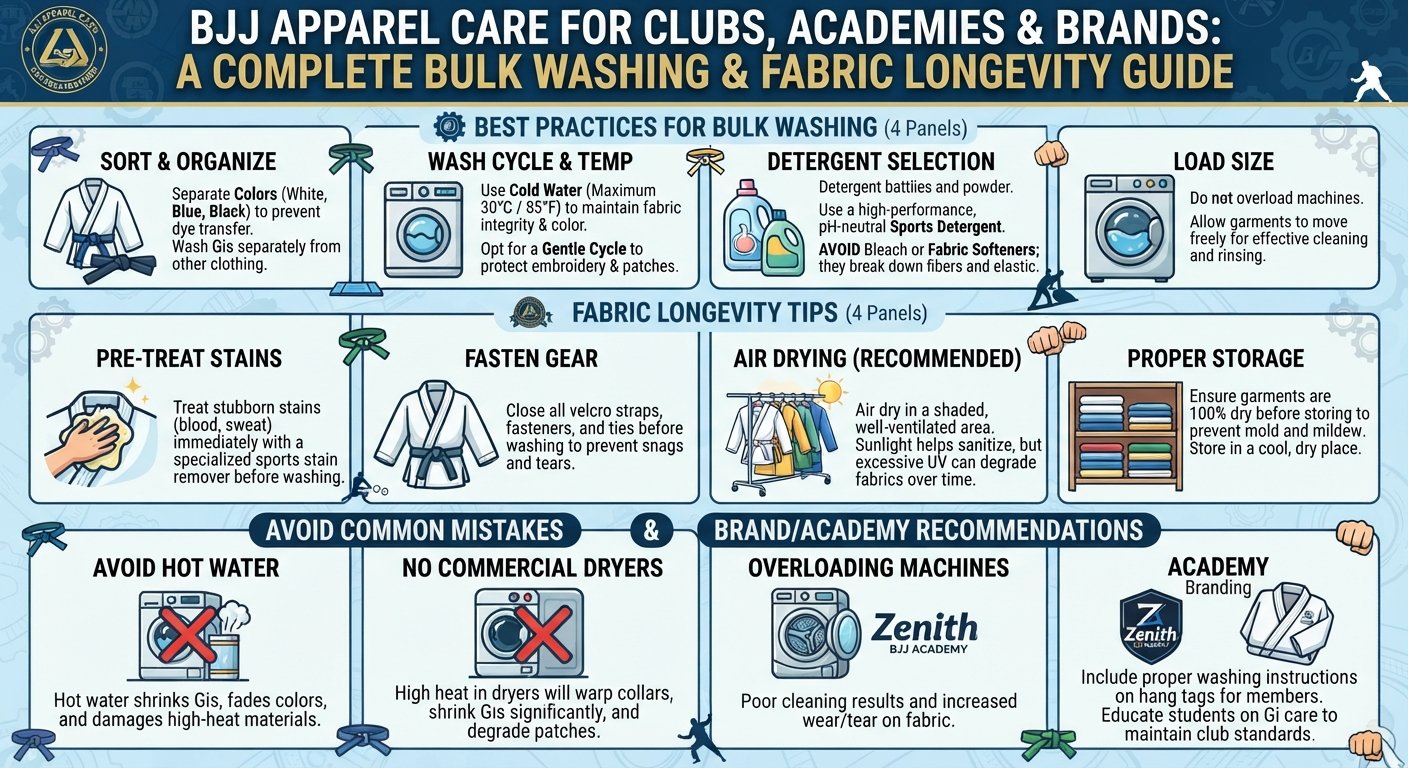
BJJ Apparel Care for BJJ Clubs, Academies and Brands: A Complete Bulk Washing & Fabric Longevity Guide
Maintaining BJJ apparel care for BJJ academies, clubs and Brazilian Jiu Jitsu brands is one of the...
 BJJ Training Apparel
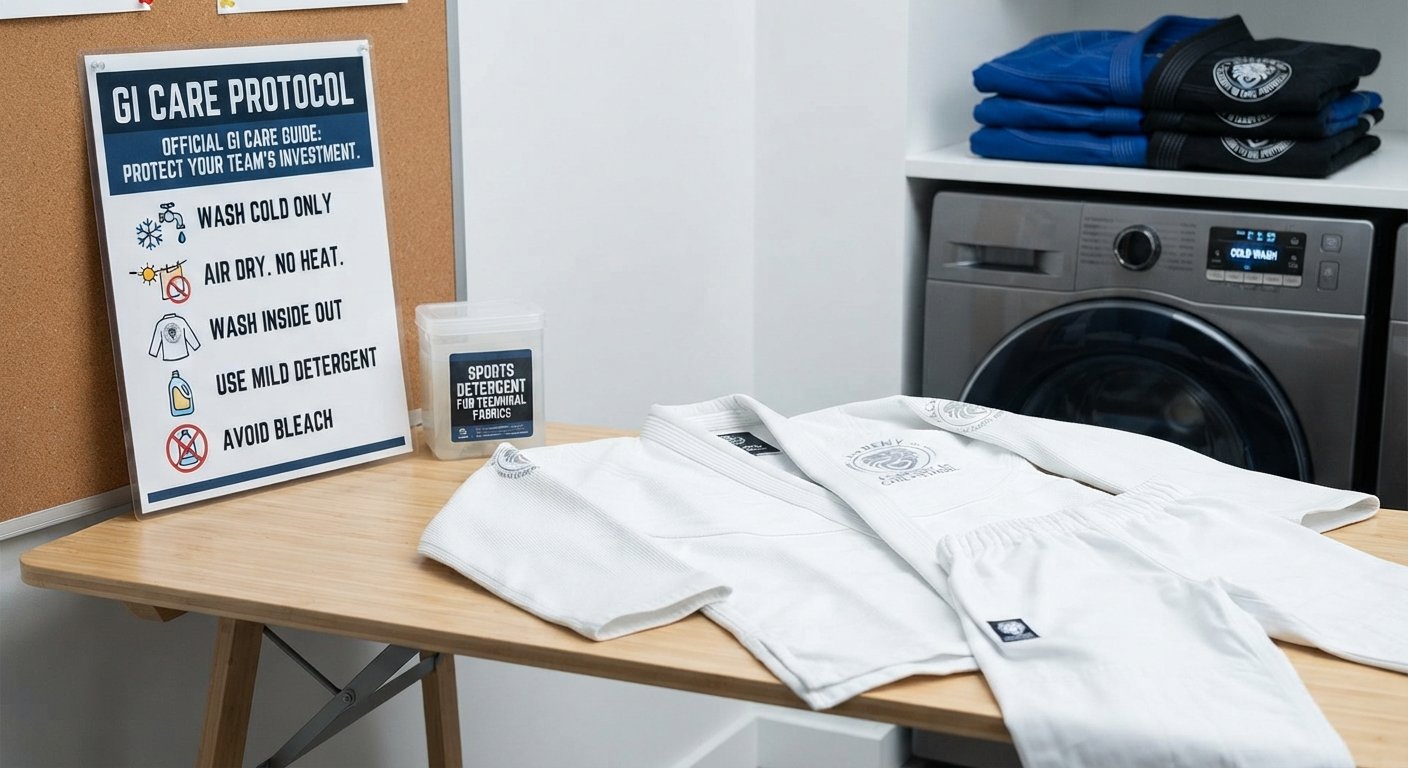
How to Wash BJJ Gi the Right Way: A Survival Guide for BJJ Academies & Brands
Protect Your Team’s Reputation, Branding & Grappling Uniform InvestmentIf you manage a BJJ academy, run a compe...